

| 일 | 월 | 화 | 수 | 목 | 금 | 토 |
|---|---|---|---|---|---|---|
| 1 | 2 | 3 | 4 | 5 | 6 | 7 |
| 8 | 9 | 10 | 11 | 12 | 13 | 14 |
| 15 | 16 | 17 | 18 | 19 | 20 | 21 |
| 22 | 23 | 24 | 25 | 26 | 27 | 28 |
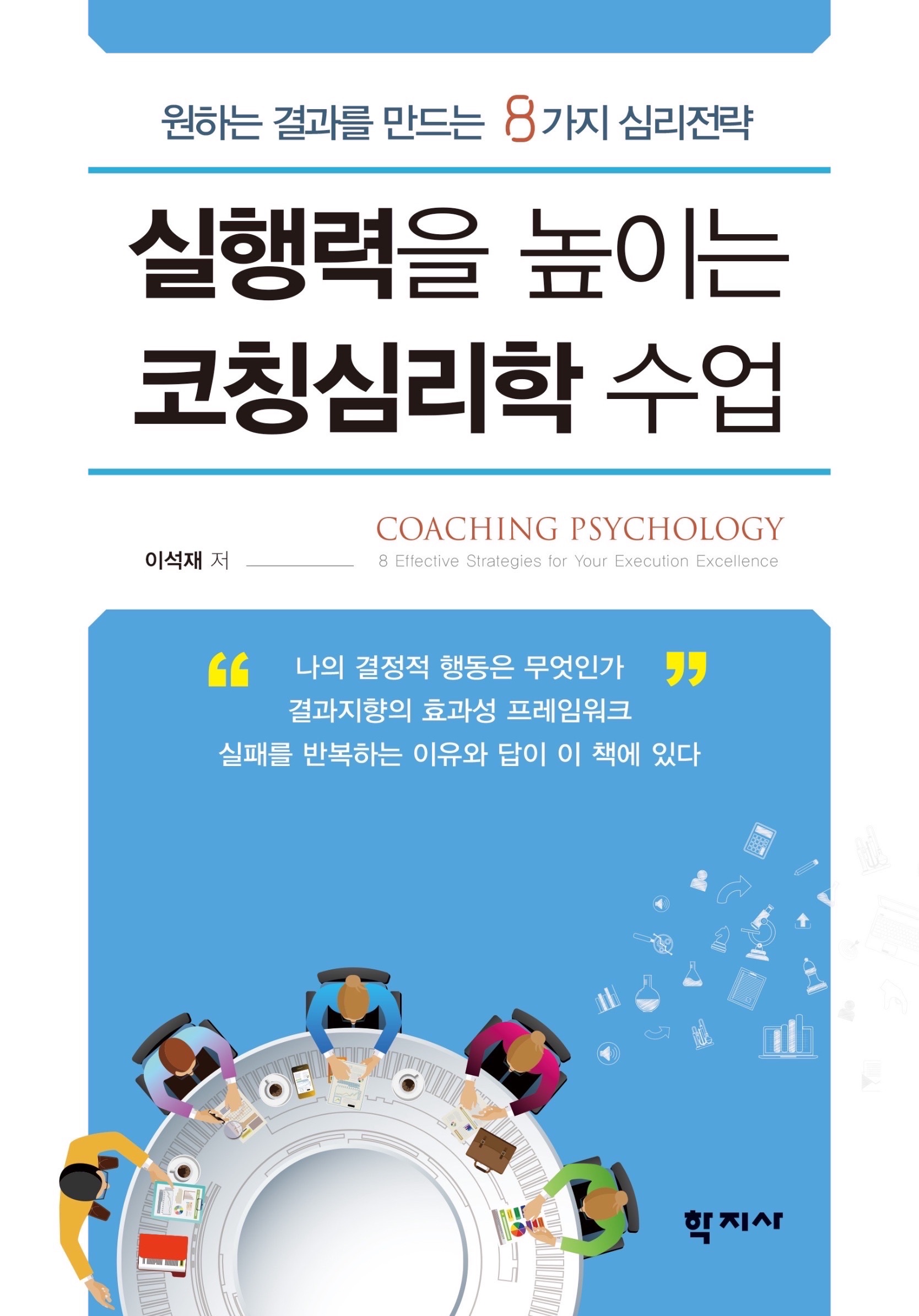
- 실행력을 높이는 코칭심리학 수업
- 생각 파트너 이석재
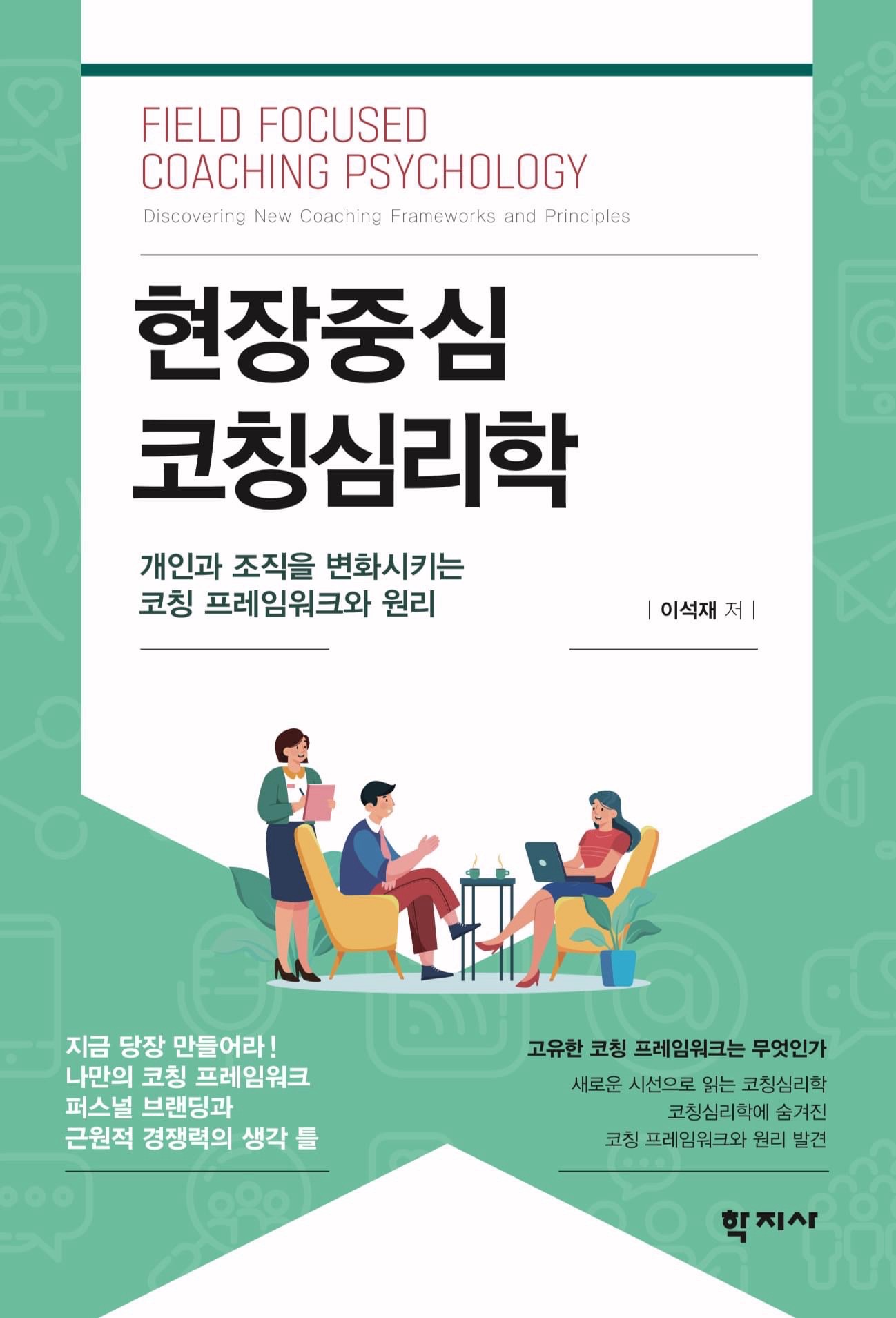
- 현징증심 코칭심리학
- 관점 코칭
- 효과성 코칭 모델
- Sukjae Lee Ph.D.
- 효과성 코칭
- thinking partner
- 코칭방법론
- 관점 전환
- 현장중심 코칭심리학
- 3S-FORM Coaching Model
- 떠도는 마음 사용법
- 코칭심리학 공부방
- 효과성코칭워크숍
- Effectiveness Coaching
- 원하는 결과
- 경영심리학자의 효과성 코칭
- 씽킹 파트너
- 결정적 행동
- 증거기반코칭
- 코칭 프레임워크
- Coach Sukjae Lee
- 이종서 코치
- 3S-FORM Coaching Model과 뇌과학의 결합
- Effectiveness Coaching Model
- Effectiveness Coaching Methodology
- 코치올
- 효과성 프레임워크
- 효과성 코칭 방법론
- Today
- Total
코치올
Awakening Self-Awareness to Facilitate Change 본문
Awakening Self-Awareness to Facilitate Change
Sukjae Lee, Ph.D.
Creator of the Effectiveness Coaching Methodology
Feburary 5, 2026
Abstract
Professionals in coaching, counseling, and education increasingly work with individuals who face complex demands for change arising from misalignment between personal aspirations and organizational expectations. Although self-awareness is widely acknowledged as a foundational element in coaching, its role in translating demands for change into concrete and sustainable action remains underexplored.
This article conceptualizes self-awareness as a coaching-mediated developmental process that connects demands for change, decisive action, and desired outcomes. Moving beyond behavior-focused approaches, the article argues that effective change requires an integrated focus on being—who the individual is becoming—and doing—the actions taken in context. To operationalize this integration, five criteria of self-awareness are introduced: identity, agency, purpose, alignment, and acceptance.
Each criterion is articulated as a reflective and experiential domain that coaches, counselors, educators, and leaders can actively engage within developmental conversations. By translating these criteria into practitioner-accessible language, the article contributes a structured yet flexible framework for awakening self-awareness and creating dialogic environments that support meaningful and contextually viable change. Implications for coaching practice, leadership development, and adult learning are discussed.
Keywords
Self-awareness; Change facilitation; Decisive action; Identity and agency; Purpose and alignment; Coaching practice
The demand for change reflects a psychological orientation toward envisioning and shaping one’s life, grounded in an awareness that transformation is necessary. In coaching and helping professions, this demand often emerges when individuals recognize a discrepancy between their current reality and desired states. Such experiences are closely connected to a sense of purpose and meaning in life (Frankl, 1963). Both individuals and organizations pursue goals and outcomes that reflect underlying values and purposes. When goals are challenging, they require changes not only in observable behavior but also in how individuals interpret situations and relate to themselves and others.
Personal goals and organizational goals may align or diverge. When these goals are meaningfully connected, organizational effectiveness and individual engagement tend to increase, reflecting research on person–organization fit and values congruence (Kristof, 1996). From a coaching perspective, sustainable change requires attention to both being—who the individual is becoming—and doing—the actions taken in practice. Change efforts that focus exclusively on execution without addressing underlying identity, values, and meaning often result in short-term compliance rather than durable transformation.
When an individual’s personal goals are reflected within organizational goals, this represents an ideal working condition. In reality, however, such alignment is relatively rare. This raises a developmental question: how should individuals respond when personal and organizational goals are misaligned? This question activates self-awareness regarding one’s context and one’s relationship to it. It also invites reflection on the type of change required, the outcomes that are genuinely desired, and the decisive actions that can realistically connect change demands to those outcomes. Such reflective inquiry aligns with sensemaking perspectives in complex organizational environments (Weick, 1995).
Decisive actions imply a departure from established patterns of thinking and behavior. Research on human agency emphasizes that individuals act as intentional agents within structural constraints (Bandura, 2001). In coaching conversations, the challenge often lies not in identifying ideal actions, but in identifying actions that are feasible, meaningful, and value-consistent. Efforts to enhance alignment frequently involve proactively shaping one’s environment, a process that may evoke frustration and emotional strain.
Five Criteria of Self-Awareness That Awaken the Demand for Change
1) Identity: Am I discovering who I am?
Leaders engaged in coaching often receive feedback focused on performance and role expectations. While valuable, such feedback tends to overlook deeper questions of identity—how individuals understand themselves beyond functional roles. Identity development involves integrating personal identity with social identity derived from relational and organizational contexts (Tajfel, 1982). Reflective exploration of authenticity and emotional resonance supports a coherent sense of self that grounds sustainable change.
2) Agency: Am I envisioning and creating my life?
Agency refers to the experience of being an active author of one’s life rather than a passive responder to circumstances. Theories of human agency emphasize intentionality, self-regulation, and the capacity to influence one’s environment (Bandura, 2001). In coaching contexts, agency is expressed through choices that reflect responsibility and authorship, even within constraints.
3) Purpose: Am I fulfilling the purpose of my life?
Purpose provides an organizing framework that connects values, action, and meaning. Research on meaning in life suggests that purpose supports resilience and psychological well-being, particularly during periods of challenge (Frankl, 1963). Clarifying purpose involves articulating core values, translating them into action, and assessing whether outcomes contribute positively beyond the self.
4) Alignment: Is my life aligned with the purpose I pursue?
Alignment concerns the congruence between stated values or purpose and daily actions. Misalignment often manifests as psychological discomfort or disengagement. Research on values congruence suggests that alignment supports motivation and well-being (Kristof, 1996). Alignment is cultivated through intentional practices, habits, and rituals that embody purpose.
5) Acceptance: Do I accept outcomes as they are?
Self-acceptance is a foundational element of psychological well-being and effective self-regulation. From a cognitive-behavioral perspective, unconditional self-acceptance involves embracing oneself independent of outcomes or evaluations (Ellis, 1994). Acceptance does not preclude change; rather, it creates emotional stability that supports learning and growth.
Discussion
This article conceptualizes self-awareness as a dynamic, context-sensitive process rather than a purely cognitive activity. By presenting five criteria of self-awareness, the framework integrates identity, meaning, agency, alignment, and acceptance into a coherent process that links demands for change to decisive action and outcomes.
A central contribution lies in reframing self-awareness as a relational and dialogic phenomenon activated within coaching conversations. Rather than assuming that insight alone produces change, the framework highlights how attention to specific self-awareness domains enables individuals to select actions that are both feasible and meaningful within contextual constraints.
Importantly, the framework recognizes that self-awareness is not activated uniformly across all domains. Different change contexts call for attention to different criteria. This flexible orientation aligns with contemporary views of adult development and sensemaking in complex systems.
Practical Implications
For coaches, counselors, educators, and leaders, the five criteria offer a structured yet non-prescriptive lens for facilitating change-oriented conversations. Practitioners can identify which domain of self-awareness is most salient for a given individual, thereby supporting more precise and effective dialogue.
The framework also addresses a common challenge in practice: clients who approach self-awareness solely as an intellectual exercise. By engaging identity, purpose, alignment, and acceptance alongside cognition, practitioners can create dialogic environments that invite deeper awareness and experiential insight.
At an organizational level, the criteria can inform leadership development, coaching supervision, and learning design by reframing resistance or stagnation as signals of unaddressed self-awareness domains rather than deficits in motivation or capability.
Finally, the framework invites practitioners to cultivate their own self-awareness as facilitators of change. Practitioners who embody clarity across these criteria are better positioned to create relational spaces in which others can awaken awareness and engage in meaningful transformation.
References
Bandura, A. (2001). Social cognitive theory: An agentic perspective. Annual Review of Psychology, 52(1), 1–26.
Ellis, A. (1994). Reason and emotion in psychotherapy (Rev. ed.). Birch Lane Press.
Frankl, V. E. (1963). Man’s search for meaning. Beacon Press.
Kristof, A. L. (1996). Person–organization fit: An integrative review of its conceptualizations, measurement, and implications. Personnel Psychology, 49(1), 1–49.
Tajfel, H. (1982). Social identity and intergroup relations. Cambridge University Press.
Weick, K. E. (1995). Sensemaking in organizations. Sage Publications.
 |
 |
 |
'3. 코칭심리연구 > 코칭심리 탐구' 카테고리의 다른 글
| 2026 The recent update of Effectiveness Coaching (0) | 2026.02.09 |
|---|---|
| 코칭의 본질 (0) | 2026.02.08 |
| MEWEMIND란 무엇인가 (0) | 2026.02.05 |
| MEWEMIND: An Ontological Reconsideration of Mental Modeling (0) | 2026.02.04 |
| MEWEMIND의 자리 (0) | 2026.02.04 |


