
| 일 | 월 | 화 | 수 | 목 | 금 | 토 |
|---|---|---|---|---|---|---|
| 1 | 2 | 3 | 4 | 5 | 6 | 7 |
| 8 | 9 | 10 | 11 | 12 | 13 | 14 |
| 15 | 16 | 17 | 18 | 19 | 20 | 21 |
| 22 | 23 | 24 | 25 | 26 | 27 | 28 |
- Effectiveness Coaching Model
- 씽킹 파트너
- 효과성 프레임워크
- 현장중심 코칭심리학
- 효과성코칭워크숍
- 이종서 코치
- 원하는 결과
- 코치올
- 증거기반코칭
- 현징증심 코칭심리학
- thinking partner
- 코칭방법론
- 코칭심리학 공부방
- Effectiveness Coaching
- 떠도는 마음 사용법
- 실행력을 높이는 코칭심리학 수업
- 효과성 코칭 모델
- 3S-FORM Coaching Model과 뇌과학의 결합
- 관점 전환
- 효과성 코칭
- 코칭 프레임워크
- 경영심리학자의 효과성 코칭
- 생각 파트너 이석재
- 결정적 행동
- Coach Sukjae Lee
- Sukjae Lee Ph.D.
- 3S-FORM Coaching Model
- Effectiveness Coaching Methodology
- 관점 코칭
- 효과성 코칭 방법론
- Today
- Total
코치올
How ELA develops your Self-awareness? 본문
Sukjae Lee Ph.D.
Creator of the Effectiveness Coaching Methodology
2025. 12. 8.
I. The ELA is a right tool to develop Self-awareness
- Objective Data vs. Self-Perception: Leaders often have blind spots about their behavior and impact on others. The ELA provides objective, structured data about specific leadership skills and attributes, offering a mirror to the leader.
- Identifying the Perception Gap: The report visually represents where the leader's self-rating differs from the ratings of others. Recognizing this gap is often the crucial starting point for the leader to realize the need for change (the 'Feedback' stage of the FORM process).
- Behavioral Patterns: By seeing consistent feedback across different sources, the leader can recognize recurring behavioral patterns or "soft skill" deficiencies (e.g., communication style, emotional management) that they might have previously been unaware of.
- Emotional Intelligence Development: This newfound awareness is a cornerstone of emotional intelligence (EI). As leaders understand how their actions impact others, they can better manage their emotions and adjust their interactions, which is critical for effective leadership.
- Foundation for Action: The ELA results move the leader past assumptions to an evidence-based understanding of their strengths to leverage and weaknesses to improve, providing a clear, targeted roadmap for development.

Scenario 1: Communication and Transparency
- Alex's Self-Perception: "I maintain clear communication and set achievable goals, which fosters a motivated team."
- Team Feedback: The team feedback in the ELA reveals a significant lack of clarity. Alex is perceived as inconsistent in his updates, often leaving the team in the dark about the why behind decisions.
- Specific Feedback Example: "We appreciate the clarity of instructions on daily tasks, but we wish we understood the bigger picture. We sometimes feel lost when priorities shift unexpectedly because we don't know the overall vision."
- Self-Awareness Gap: Alex realizes that "informing" is different from "ensuring understanding and alignment." He had been focusing on one-way information delivery rather than two-way communication and active listening.
Scenario 2: Empowerment and Delegation
- Sarah's Self-Perception: "I empower my team members by delegating tasks and responsibilities and providing support when needed."
- Team Feedback: The team feedback suggests Sarah is perceived as "hand-holding" and overly involved in problem-solving, which limits their growth.
- Specific Feedback Example: "Your instructions are very clear and guide us through tasks, but we gain more experience when you allow us to figure out solutions on our own. We need more opportunities to take the initiative and follow through without needing constant managerial consultation or approval."
- Self-Awareness Gap: Sarah discovers that her desire to be helpful is interpreted as a lack of trust. She was unaware that her micro-managing tendencies were hindering team development and confidence, rather than fostering it.
Scenario 3: Emotional Management under Pressure
A leader (Mark) believes he remains calm and professional even during high-stress situations.- Mark's Self-Perception: "I handle change well and stay composed during challenging times, setting a good example for the team."
- Team Feedback: The ELA indicates that under pressure, Mark's tone occasionally becomes terse and frustrated, creating a tense work environment.
- Specific Feedback Example: "Mark is clearly invested in his work, but in stressful situations, his tone occasionally comes off as impatient. While his ability to focus during challenging times is great, we wish he would be more mindful of his non-verbal communication, which impacts team morale."
- Self-Awareness Gap: Mark realizes that while he may feel internally calm, his outward behavior (tone, body language) conveys stress to his team. He was blind to how his emotional responses were affecting team performance and well-being.
II. How to use the Cognitive Strategies to develop an action plan?
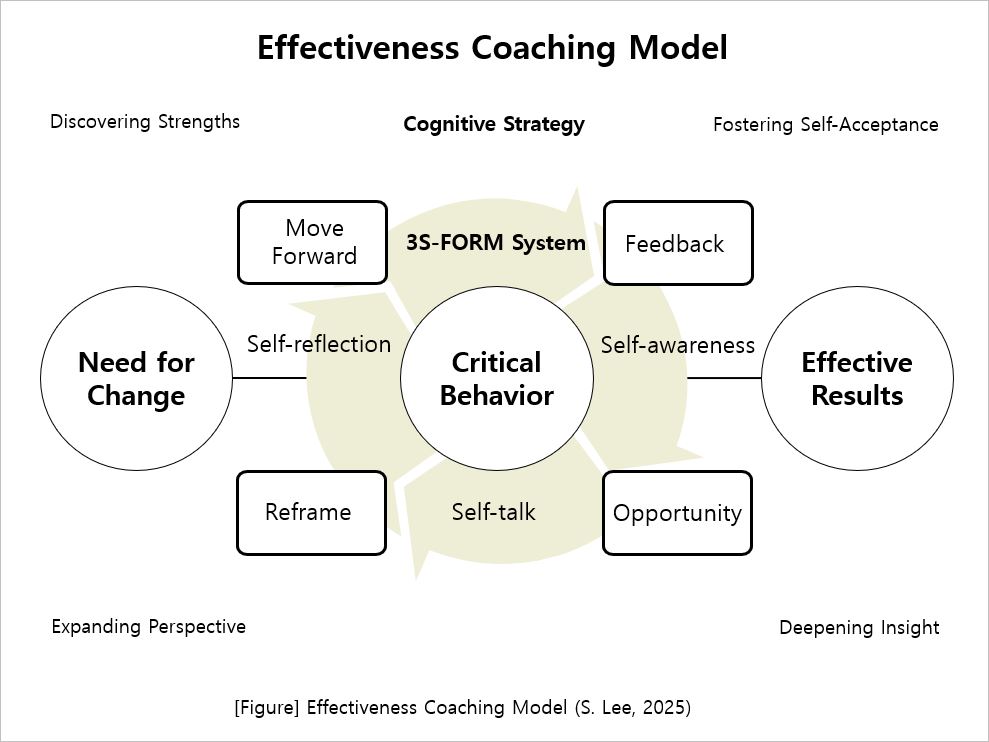
The Coaching Conversation & Action Plan Development
1. Fostering Self-acceptance
- Coach's approach: Uses empathy and positive presuppositions to acknowledge Sarah's care for her team.
- Coach's Question: "It sounds like you truly care about your team's success and want to ensure they feel supported. What do you notice about how your actions (e.g., providing constant consultation) are being interpreted by the team, based on the ELA feedback?"
- Sarah's Reflection: Sarah acknowledges the gap between her intent (support) and the impact (lack of trust/growth limitation). She accepts her intent as good but recognizes the need to change her behavior.
2. Deepening Insights
- Coach's approach: Asks probing questions to explore underlying beliefs and values.
- Coach's Question: "When you feel the urge to jump in and solve a problem for a team member, what is the thought process or concern happening in your mind in that exact moment? What is the risk you are trying to avoid?"
- Sarah's Reflection: Sarah identifies a fear that mistakes might delay project timelines and reflect poorly on her management. This insight reveals a need to build her self-efficacy in risk management and delegation.
3. Expanding Perspectives
- Coach's approach: Encourages considering the long-term impact and others' viewpoints.
- Coach's Question: "If we look ahead six months, what does a highly empowered, autonomous team look like? What would the team members be saying about their opportunities for growth if you were successfully delegating more effectively?"
- Sarah's Reflection: Sarah visualizes a more independent, motivated team. She realizes that her current approach, while providing short-term safety, harms the team's long-term development.
4. Discovering Strengths
- Coach's approach: Focuses on past successes with delegation or specific team member capabilities.
- Coach's Question: "Think back to a time when you successfully delegated a complex task and the person excelled. What did you do differently in that situation? How can we leverage that 'strength' in delegation for this current goal?"
- Sarah's Reflection: Sarah recalls a project where she clearly defined the outcome but allowed flexibility in the process. She identifies this clear goal-setting as a strength she can reapply.
The Action Plan (Move Forward)
- Goal: Improve team autonomy and perceived empowerment within the next quarter.
- Action Steps:
- Stop "hand-holding": For the next two weeks, when a team member brings a problem, I will only ask "What have you tried so far?" and "What do you suggest?"
- Clarify Outcomes: For all new tasks, I will use my "clear goal setting" strength to define the expected outcome and deadline clearly, but leave the process of execution to the team member.
- Schedule Check-ins: Implement structured, brief (15-minute) weekly check-ins for complex projects instead of ad-hoc interruptions.

III. Mental Model links to External Perspective and Internal Understanding
- Internal Understanding: Mental models are the internal representations of our beliefs, assumptions, and knowledge, formed through personal experience. They guide our actions, thoughts, and decisions, essentially forming our personal "truth".
- External Perspectives: When we encounter new information or feedback from the outside world (e.g., ELA results), our existing mental models heavily influence how we perceive, process, and integrate this information.
- The Link (The Gap):
- Filtering & Bias: Strong, deeply ingrained mental models can filter out or reject external information that contradicts existing beliefs, leading to "self-fulfilling bias".
- The Role of Coaching: In effectiveness coaching, tools like the ELA force individuals to confront the gap between their internal mental model (self-perception) and external perspectives (others' feedback).
- Change & Growth: Recognizing this gap, particularly through the self-awareness stage (part of the 3S internal drivers), creates a need for change. The coaching process (specifically the 'Reframe' stage) then helps update or replace these mental models with more effective ones, facilitating new behaviors and sustainable change.
References
Lee, Sukjae (2006). Develop 18 Core Leadership Competencies. Seoul: Kim & Kim Books.
Lee, Sukjae (2014). Effectiveness Coaching by a Business Psychologist. Seoul: Kim & Kim Books.
Lee, Sukjae (2019). Thought Revolution That Changes My Life. Seoul: Wildbooks.
Lee, Sukjae (2020). Coaching Methodology. Seoul: Korea Coaching Supervision.
Lee, Sukjae (2020). How to Use a Wandering Mind. Seoul: Plan B Design.
Lee, Sukjae (2023). Field-Focused Coaching Psychology. Seoul: Hakjisa.
Lee, Sukjae (2024). Coaching Psychology Class for Boosting Execution. Seoul: Hakjisa.
Lee, Sukjae (2024). Thinking Partner. Gyeonggi: Moa Books.
Lee, Sukjae & Lee, Jongseo (2025). Perspective Shifting. Seoul: Parkyoungstory.
 |
 |
'3. 코칭심리연구 > 코칭심리 탐구' 카테고리의 다른 글
| 매듭짓기 (1) | 2025.12.08 |
|---|---|
| Reframe is Critical for Updating Mental Models (0) | 2025.12.08 |
| Effectiveness Coaching: Individual Coaching vs Team Coaching (0) | 2025.12.07 |
| Effectiveness Coaching: Updates and Trends (0) | 2025.12.07 |
| Perspective Shifting and Psychology within Effectiveness Coaching (0) | 2025.12.07 |


