- [방문 감사합니다] (970)

| 일 | 월 | 화 | 수 | 목 | 금 | 토 |
|---|---|---|---|---|---|---|
| 1 | 2 | 3 | ||||
| 4 | 5 | 6 | 7 | 8 | 9 | 10 |
| 11 | 12 | 13 | 14 | 15 | 16 | 17 |
| 18 | 19 | 20 | 21 | 22 | 23 | 24 |
| 25 | 26 | 27 | 28 | 29 | 30 | 31 |
- 현장중심 코칭심리학
- 관점 전환
- thinking partner
- Effectiveness Coaching
- 생각 파트너 이석재
- 결정적 행동
- 효과성 코칭 방법론
- 증거기반코칭
- 효과성 코칭 모델
- 3S-FORM Coaching Model과 뇌과학의 결합
- 현징증심 코칭심리학
- Effectiveness Coaching Methodology
- Effectiveness Coaching Model
- Sukjae Lee Ph.D.
- 이종서 코치
- 실행력을 높이는 코칭심리학 수업
- 떠도는 마음 사용법
- 관점 코칭
- 효과성 코칭
- 3S-FORM Coaching Model
- 경영심리학자의 효과성 코칭
- 미위마인드 mewemind.com
- 코칭방법론
- 코치올
- Coach Sukjae Lee
- 이종서 HR 컨설턴트
- 코칭심리학 공부방
- 멘탈 모델링 코칭
- 씽킹 파트너
- 원하는 결과
- Today
- Total
생각 파트너
The Path I Have Walked as a Coach 본문
The Path I Have Walked as a Coach
Sukjae Lee, Ph.D.
Creator of the Effectiveness Coaching Methodology
January 13, 2026
As of this year, it has been 24 years since I entered the field of coaching in 2002. As a social psychologist with a strong desire to explore a field in depth, coaching felt like a promising and intriguing emerging domain. In particular, I believed it was an excellent field for investigating the universal principles operating within the coaching phenomenon. Although I practiced coaching as a business, my deeper interest lay in inquiry itself—I approached coaching as a domain of exploration and as a set of individual research themes.
Over the past 24 years of inquiry, I have identified the core concepts inherent in the coaching phenomenon, clarified the relationships among those concepts, distilled the central ideas that run through them, and articulated the underlying logic connecting them. I formulated this logic as hypotheses and tested them through my coaching business in practice. For empirical verification, I developed three diagnostic instruments. These multi-dimensional diagnostic tools are specialized instruments designed to examine how the core concept of effectiveness operates. They allowed me to objectively validate coaching activities and outcomes by translating them into measurable changes in effectiveness.
As a result of this inquiry, I established an Effectiveness Theory. I articulated the ABC Framework, the 3S-FORM Model, and four cognitive strategies, integrating this logic into what I call the Effectiveness Coaching Model. Using this model, I have explained coaching at the individual, team, and organizational levels, while explicitly linking the individual dimension with the organizational dimension. In doing so, I connected Individual Development (ID) with Organization Development (OD). I developed a logic that enables a coach to work with a single leader while simultaneously linking individual-level change to organizational-level change.
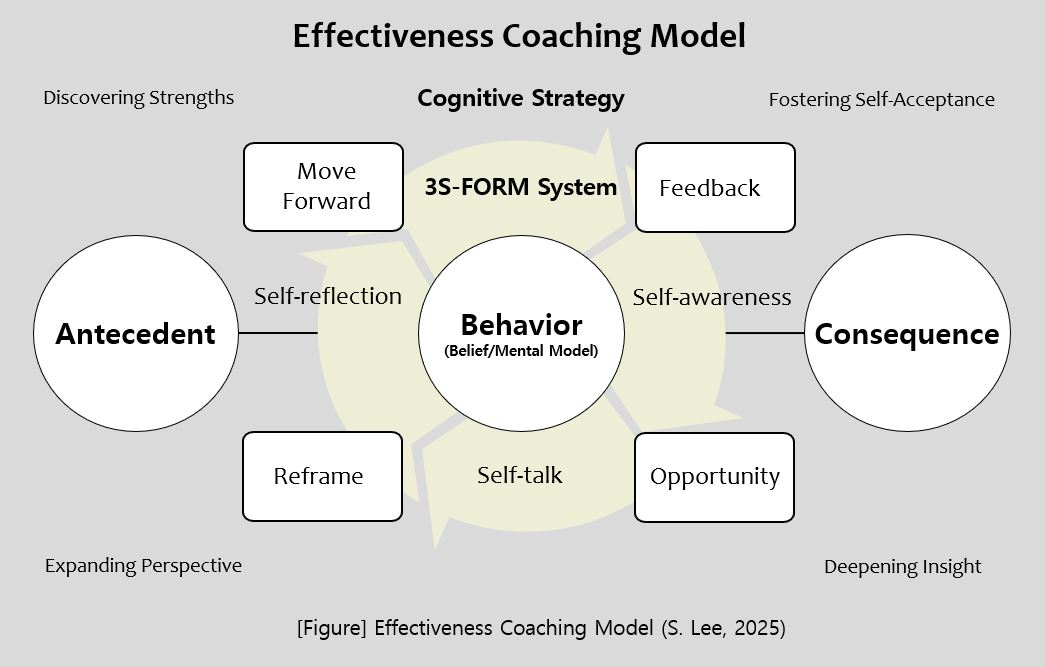
Today, coaching businesses that address effectiveness at the individual, team, and organizational levels are rapidly expanding. In 2014, advocating that “integrated coaching of individuals, teams, and organizations is the new path,” I published Effectiveness Coaching by a Management Psychologist (Lee, 2014), which compiled my coaching research and cases up to that point. In 2026, I completed an integrated coaching system that connects a framework linking brain – mental models – perspective shifting – desired results with the existing Effectiveness Coaching Methodology (ECM). I am now preparing to publish a book that presents a comprehensive coaching system integrating neuroscience, cognitive science, and ECM.
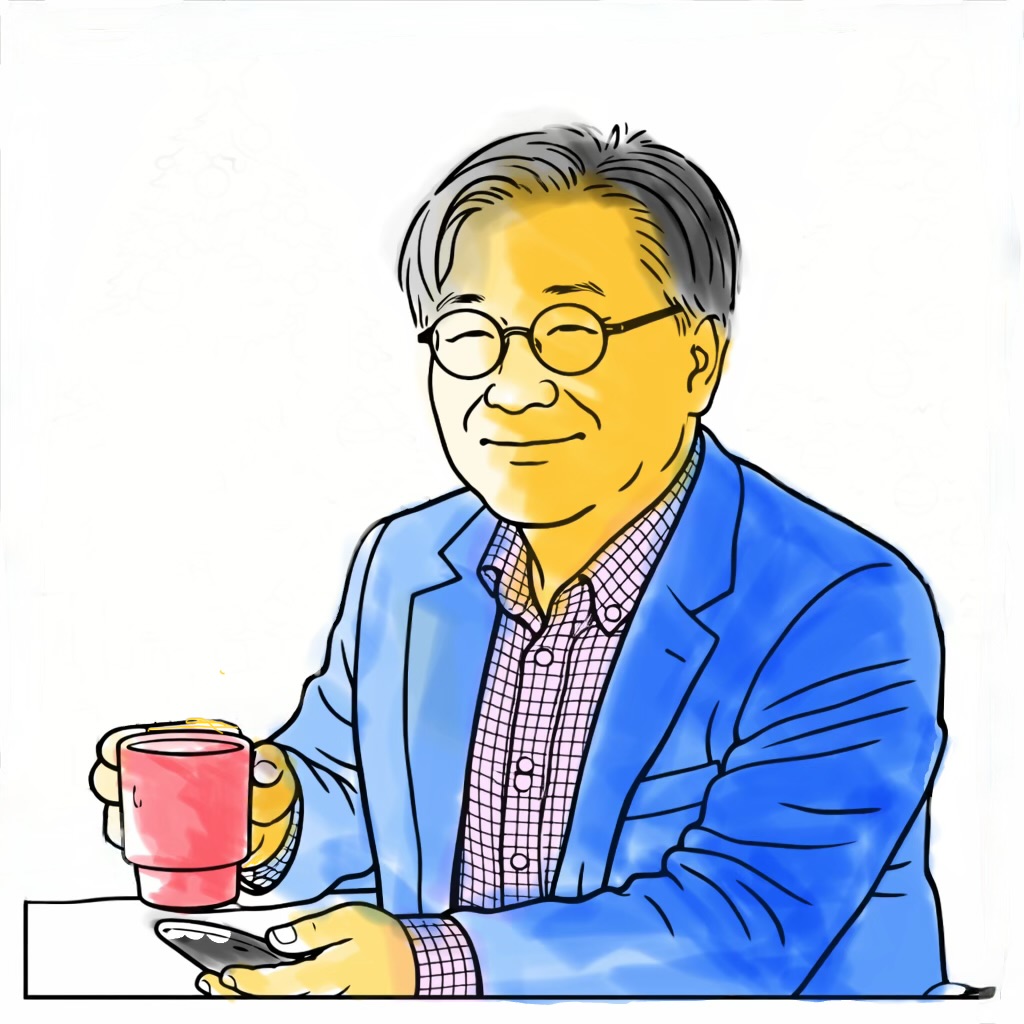
The scene of the Starfield Library at Star Plaza in Samseong-dong shimmered brilliantly. That light flowed warmly toward me. While enjoying a cup of my favorite coffee, I reflected on the past 24 years of my life. I realized that, to a meaningful extent, I have brought to completion what I set out to do.
Reference
Lee, S.-J. (2014). Effectiveness Coaching. Seoul: Thinking Partner.
'4. 코칭심리연구 > 코칭노트' 카테고리의 다른 글
| 마음의 문을 여는 방법 (0) | 2026.02.01 |
|---|---|
| Who is Coach Seok-jae Lee? (0) | 2026.01.25 |
| 관점 전환에 대한 단상 모음 (0) | 2025.11.22 |
| Overview of Effectiveness Coaching (0) | 2025.11.21 |
| Preparing for 2026 by Using the Wandering Mind (0) | 2025.11.21 |


