The 3S-FORM Coaching Model
Sukjae Lee Ph.D.
Creator of the Effectiveness Coaching Methodology
2025. 12. 10.
The 3S-FORM Coaching Model (Individual Change)
The 3S-FORM Coaching Model is a 4-stage coaching model developed by Sukjae Lee specifically to bring about individual change in leaders(Lee, S., 2014; 2020; 2023). It integrates coaching theory with behavioral change principles rooted in psychology.
This model is characterized by a diagnosis-based coaching process that includes four sequential stages and three cyclical psychological change principles.
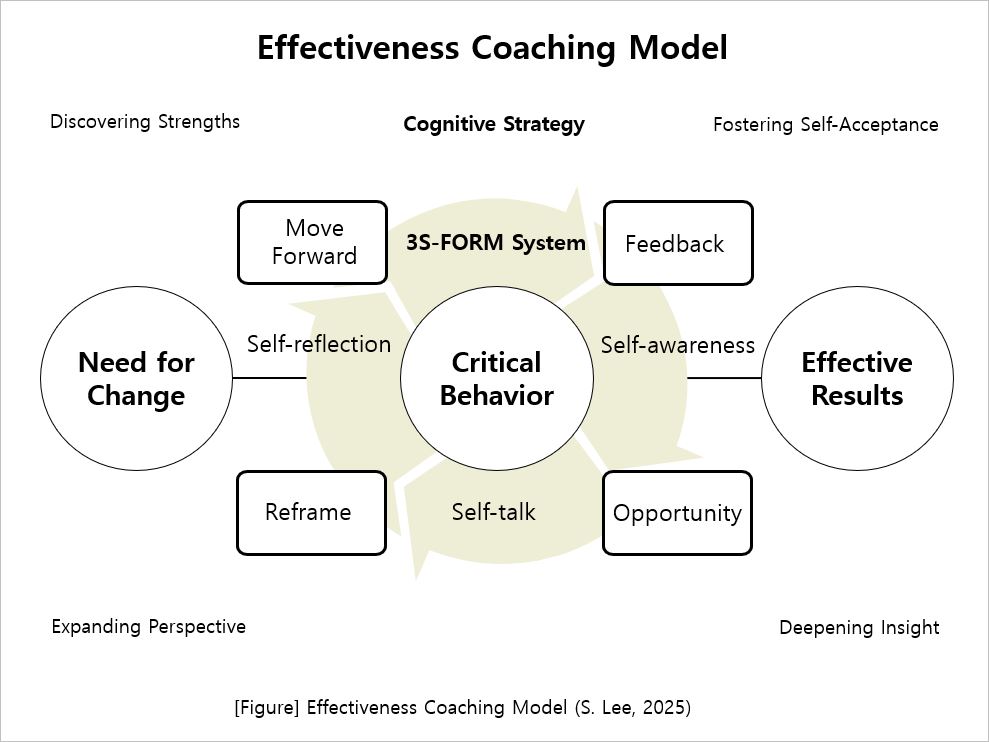
I. The 4 Stages of Change (FORM)
The model is named 'FORM' after the first letter of each of its four sequential stages.
- Feedback:
- This is the initial, diagnosis-based phase where the leader receives objective information about their current state, often through diagnostic tools like the Effective Leadership Assessment. Receiving feedback helps the coachee look objectively at themselves, which is crucial for maximizing commitment and facilitating the easy realization of the need for self-change.
- The coachee analyzes the feedback to identify areas for development and growth. This involves recognizing the specific behaviors and mindsets that need to change to achieve desired outcomes.
- Opportunity Discovery:
- This is the phase of redefining and strategizing. The coachee works to reframe their perspective, attitudes, and habitual behaviors.
- It involves designing concrete action plans and changing the content of thoughts and behaviors required to achieve the coaching goal.
- Reframe:
- The final stage is focused on execution and implementation. The coachee puts the reconstructed plans into practice.
- The aim is successful change, overcoming self-limitations, and achieving the set coaching goals.
- Forward Movement:
- The final stage is focused on execution and implementation. The coachee puts the reconstructed plans into practice.
- The aim is successful change, overcoming self-limitations, and achieving the set coaching goals
II. The 3 Cyclical Psychological Change Principles (3S)
Running concurrently and cyclically throughout the FORM stages are three psychological change principles that drive the internal process of change:
- Self-Awareness:
- Gaining an objective understanding of one's own strengths and weaknesses, often triggered by the diagnosis and feedback.
- The internal dialogue or inner conversation a person has with themselves. This is critical for challenging old beliefs and embracing new perspectives during the Reconstruction phase.
- Self-Talk:
- The internal dialogue or inner conversation a person has with themselves. This is critical for challenging old beliefs and embracing new perspectives during the Reconstruction phase.
- Self-Reflection:
- The process of deeply contemplating one's actions, thoughts, and outcomes. This helps to solidify the learning and adjust behaviors for sustained change.
The model integrates these elements to provide a structured, yet psychologically grounded, process for transforming a leader's thinking and behavior.
References
Lee, Sukjae (2006). Develop 18 Core Leadership Competencies. Seoul: Kim & Kim Books.
Lee, Sukjae (2014). Effectiveness Coaching by a Business Psychologist. Seoul: Kim & Kim Books.
Lee, Sukjae (2019). Thought Revolution That Changes My Life. Seoul: Wildbooks.
Lee, Sukjae (2020). Coaching Methodology. Seoul: Korea Coaching Supervision.
Lee, Sukjae (2020). How to Use a Wandering Mind. Seoul: Plan B Design.
Lee, Sukjae (2023). Field-Focused Coaching Psychology. Seoul: Hakjisa.
Lee, Sukjae (2024). Coaching Psychology Class for Boosting Execution. Seoul: Hakjisa.
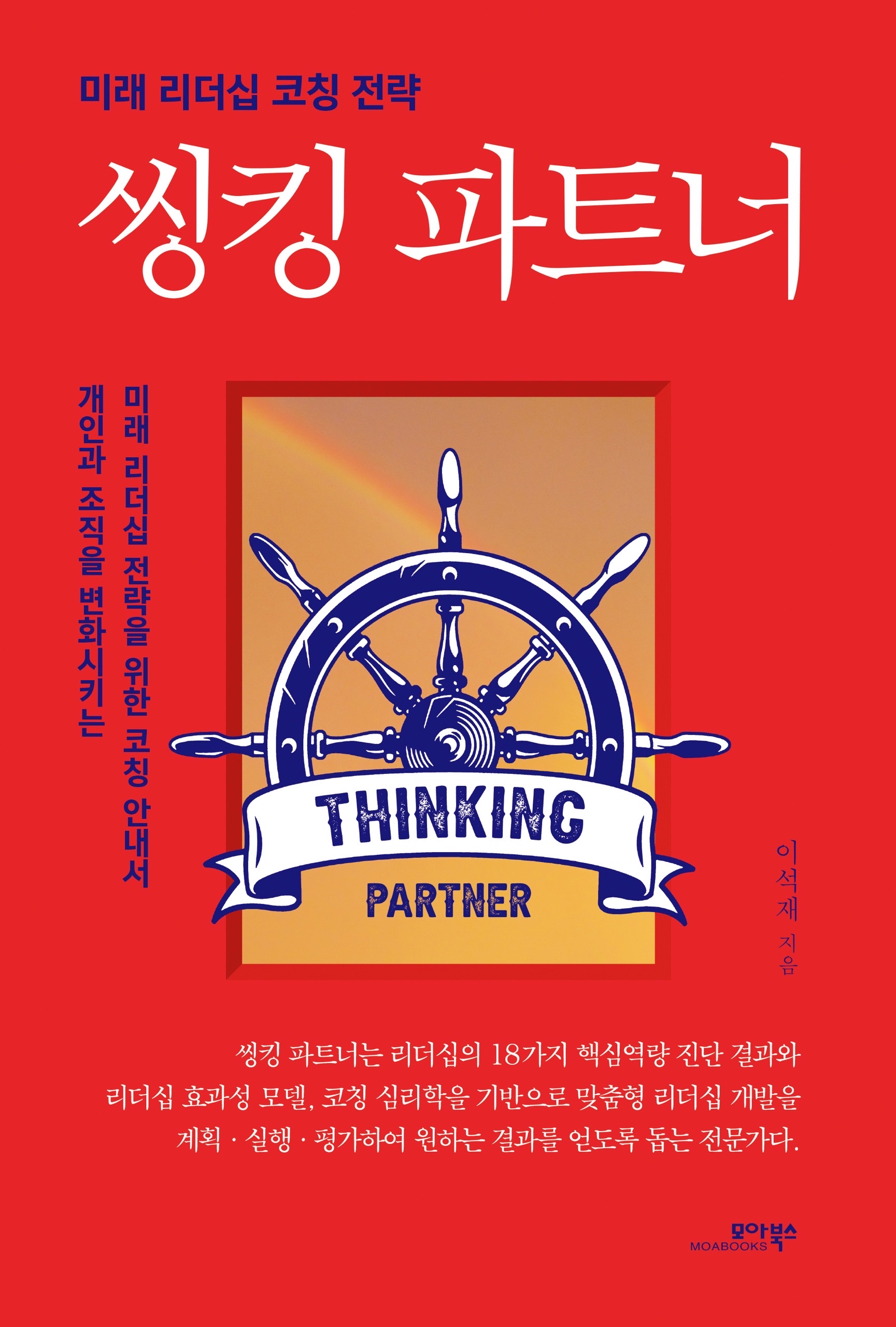
Lee, Sukjae (2024). Thinking Partner. Gyeonggi: Moa Books.
Lee, Sukjae & Lee, Jongseo (2025). Perspective Shifting. Seoul: Parkyoungstory.
참고 문헌
이석재 (2006). 18가지 리더십 핵심역량을 개발하라. 서울: 김앤김북스.
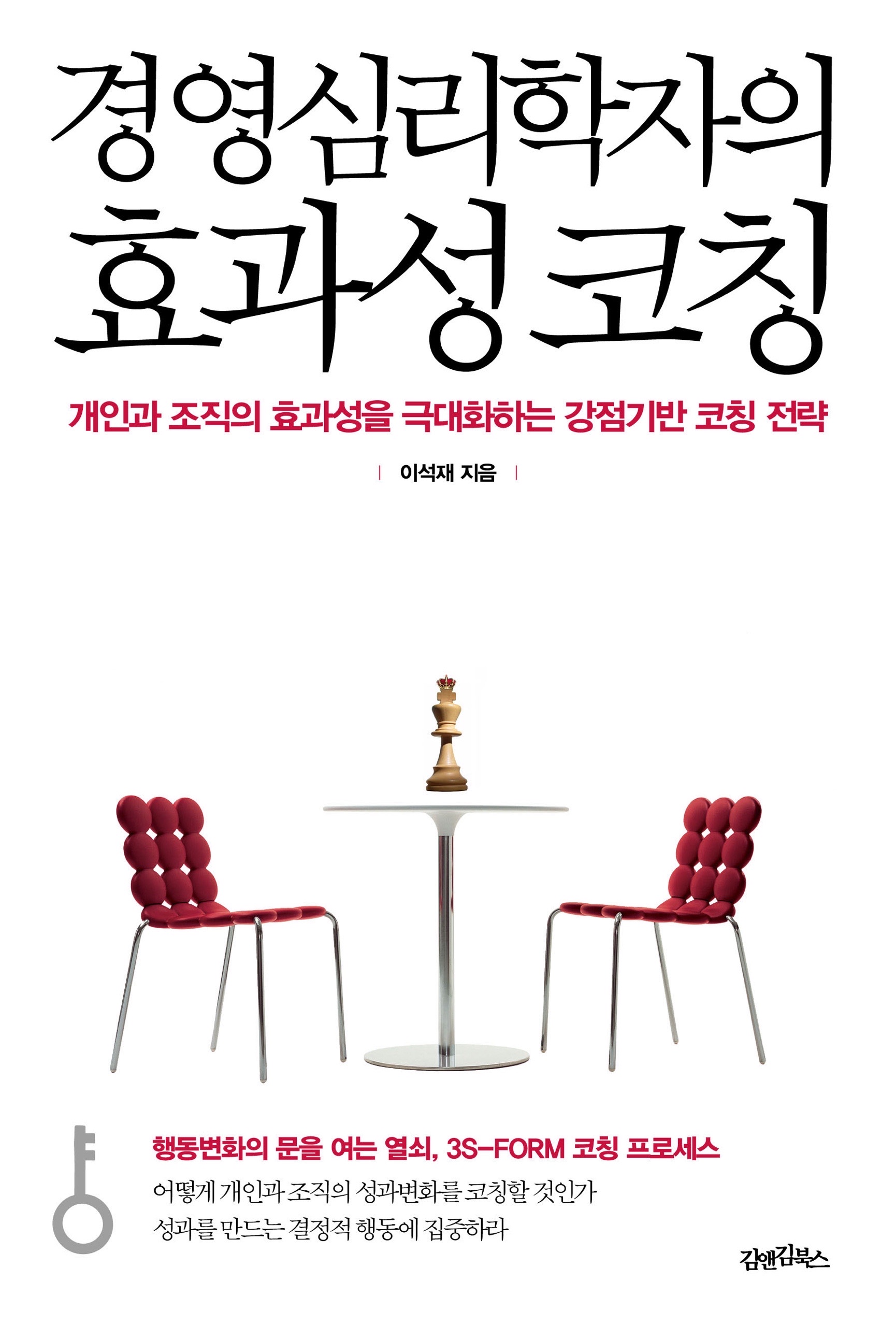
이석재 (2014). 경영심리학자의 효과성 코칭. 서울: 김앤김북스.
이석재 (2019). 내 삶을 바꾸는 생각 혁명. 서울: 와일드북.
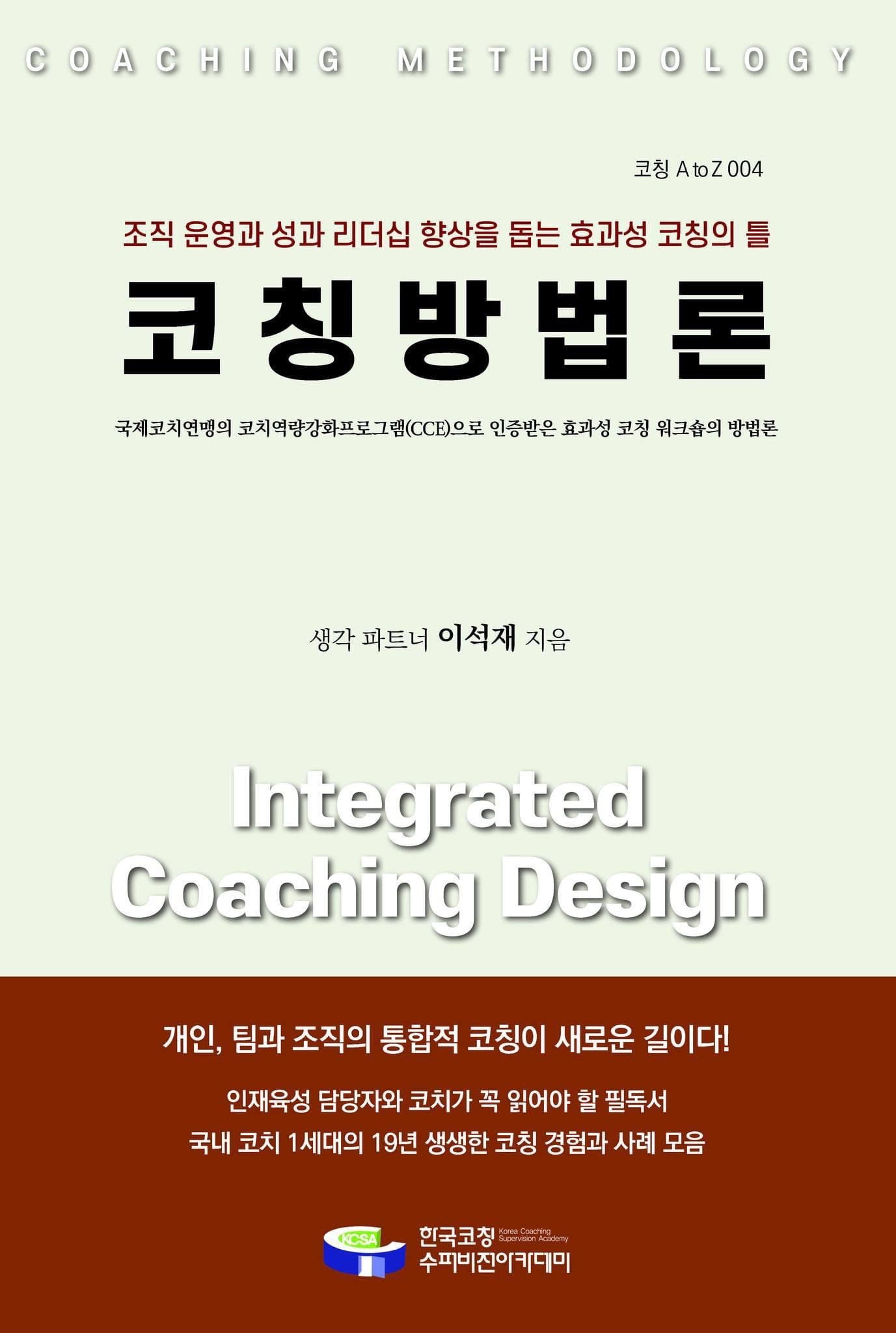
이석재 (2020). 코칭방법론. 서울: 한국코칭수퍼비전.
이석재 (2020). 떠도는 마음 사용법. 서울: 플랜비디자인.
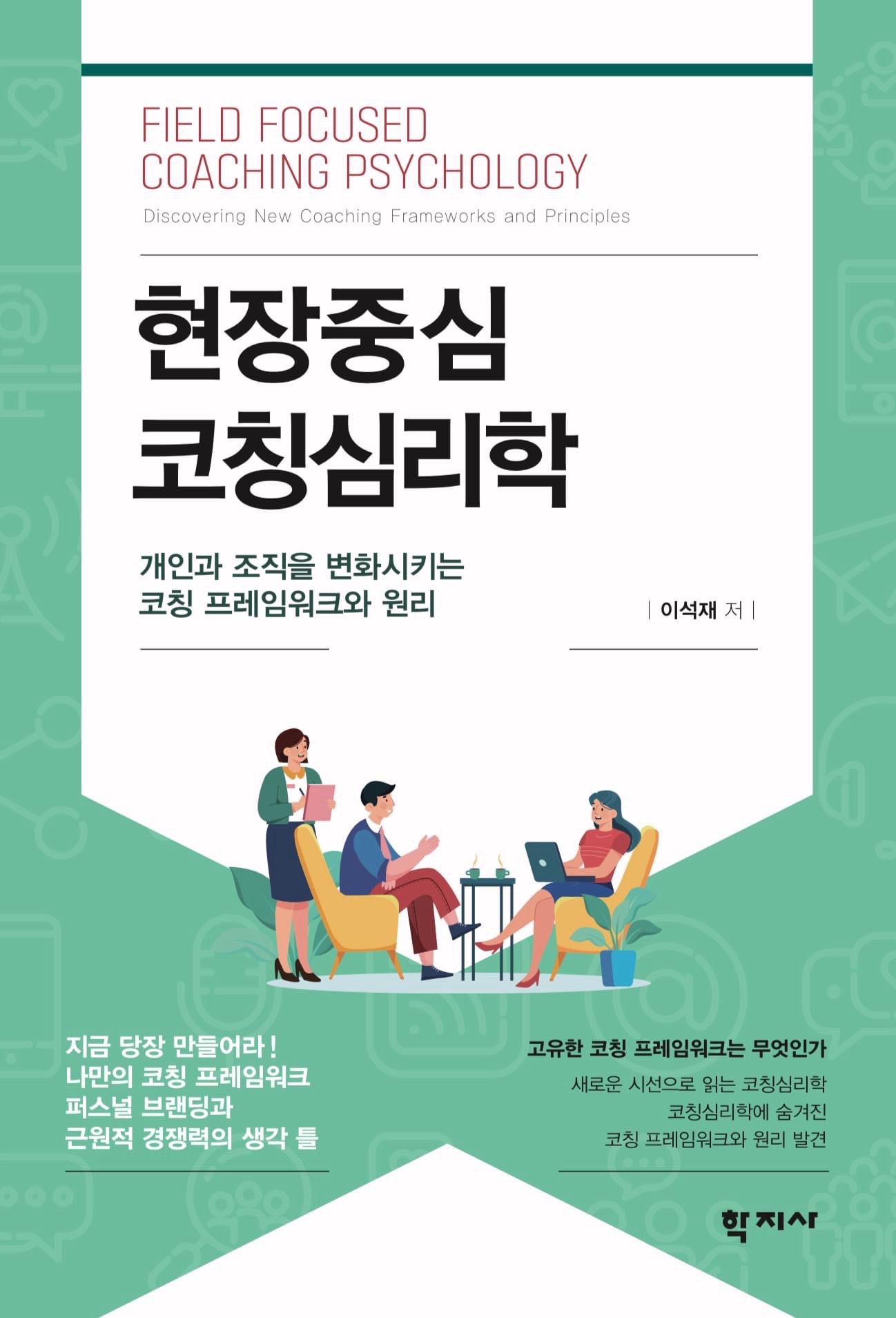
이석재 (2023). 현장중심 코칭심리학. 서울: 학지사.
이석재 (2024). 실행력을 높이는 코칭심리학 수업. 서울: 학지사.
이석재 (2024). 씽킹 파트너. 경기: 모아북스.
이석재.이종서 (2025). 관점 전환. 서울: 박영스토리.
 |
 |
 |
 |
 |
 |